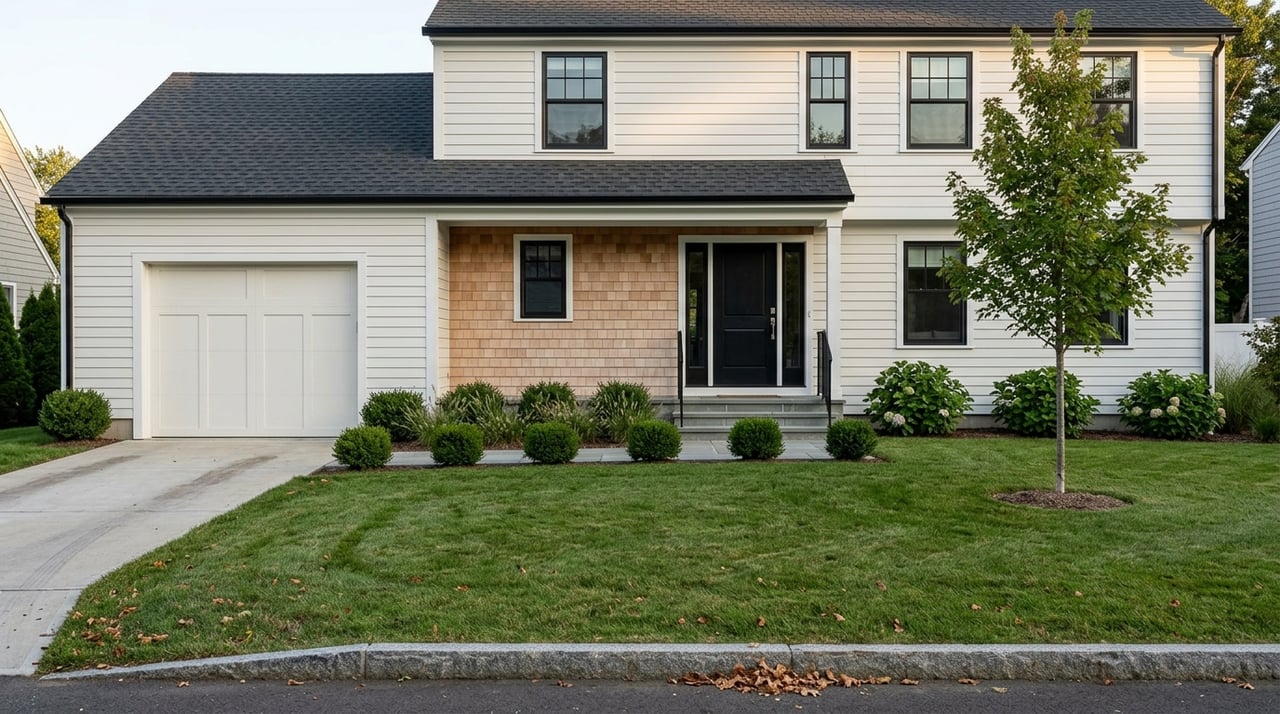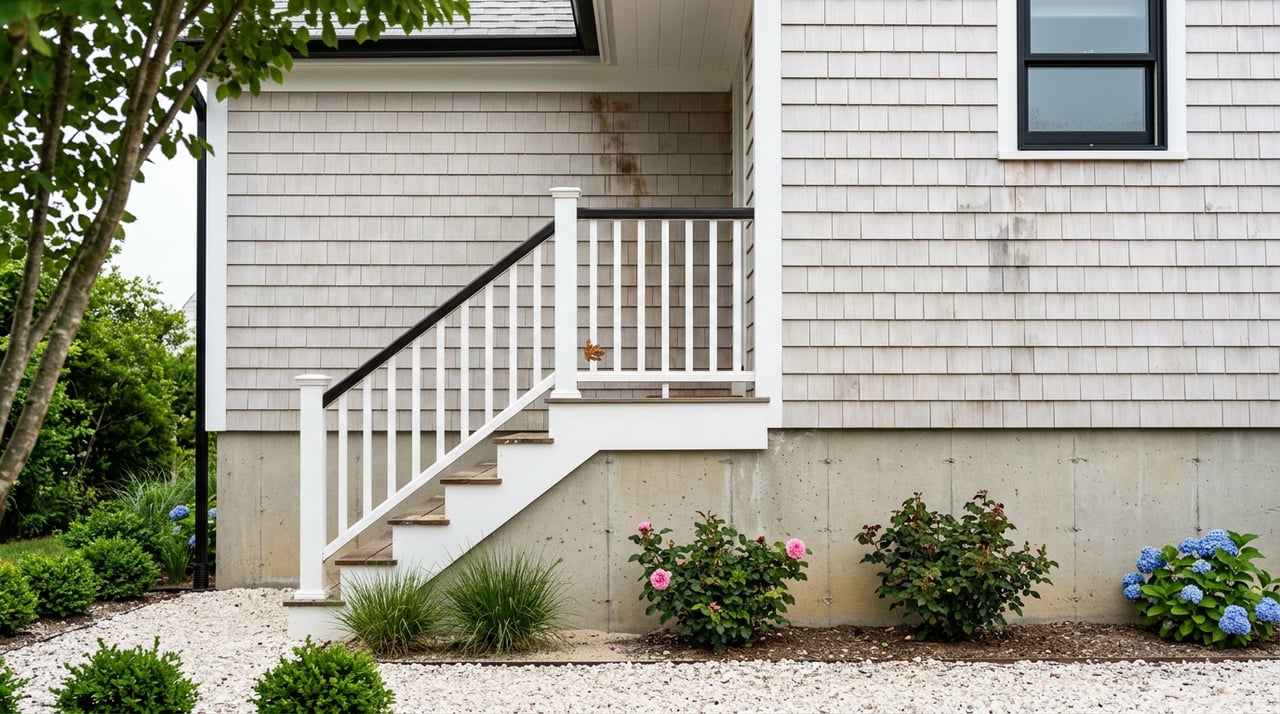
Most buyers walk into a Hull deal focused on the sale price. That number matters, of course, but on a peninsula, it is not the number that decides how the transaction ends. The number that decides it is the one printed on an elevation certificate, and everything downstream of that document — the flood insurance quote, the inspection scope, the closing timeline, the seller concessions — flows from a single measurement of your first finished floor above sea level.
If you are a few weeks from signing a Purchase and Sale on a Hull single-family, or preparing to list one, this is the piece of the transaction that catches almost everyone off guard. Not the offer, not the appraisal. The paperwork and site conditions that only apply because the ocean is a block away.
Read The Flood Zone Before You Read The Listing
Hull's flood exposure is not a rumor. The town's own records document more than 20 coastal storms since the Blizzard of 1978 that produced flood insurance claims, and the FEMA maps recognize this by carving the peninsula into three Special Flood Hazard Areas.
- Zone VE is coastal high-hazard territory where the base flood includes velocity from wave action. Building requirements are stricter because waves, not just standing water, are expected.
- Zone AE covers the 100-year floodplain where wave heights are under three feet and base flood elevations are set.
- Zone AO identifies areas where sheet flow and ponding of one to three feet is expected during a base flood, often on the back sides of dunes.
Each of these zones has its own insurance rating logic and its own construction expectations. A house in VE cannot be built on fill the way an inland house can. A house in AE with the finished floor two feet below the base flood elevation will be quoted a very different premium than the same house two feet above it.
There is one more line on the map that matters and that most buyers never hear about until it is too late: the Limit of Moderate Wave Action, or LiMWA. It marks the inland edge of the Coastal A Zone, the area where waves between 1.5 and 3 feet can still cause foundation failure during a base flood. Building codes in the Coastal A Zone often require V Zone construction standards even though the parcel is technically in an AE. If you are buying a home just inland of the shoreline in Hull, ask specifically whether the property sits inside the LiMWA. It changes what the lender will require and what a future renovation will cost you.
The Elevation Certificate Is The Actual Price Tag
An elevation certificate is a surveyor's document stating exactly how high the lowest finished floor of the house sits relative to the base flood elevation. If it exists and is favorable, a seller has a strong marketing tool. If it does not exist, or if the number is bad, the buyer inherits an underwriting problem that can arrive four days before closing.
Two moves are worth making early.
Sellers: commission the certificate before you go active, not after you are under agreement. If your floor is above base flood elevation, that fact belongs in the listing narrative and in front of the buyer's insurance agent on day one. If the number is unfavorable, you want to know before you set the price, not before you renegotiate under it.
Buyers: ask for the certificate as part of your offer, and if the seller does not have one, budget for your own during the inspection period. A flood quote without an EC is a placeholder. The real quote can be several thousand dollars higher or lower.
The 30-Day Rule That Blows Up Clean Closings
Here is the single most common preventable disaster in a Hull transaction. Most standard homeowners and renters policies do not cover flood damage, and NFIP policies do not automatically renew. On top of that, in most cases there is a 30-day waiting period before a new flood policy takes effect. If you write an offer on the 15th of the month expecting a 30-day close, and nobody starts the flood binder until the loan is clear-to-close, you have a gap between when your deed records and when your flood coverage is active. Lenders will not fund into that gap.
The fix is not complicated, but it has to be deliberate. Start the flood quote the same day the P&S is signed. If the seller already has an active NFIP policy, ask whether it can be assumed. A legacy NFIP policy that pre-dates Risk Rating 2.0 changes is sometimes cheaper than a new quote on the same property, and in a Hull transaction that difference can be meaningful.
What Hull Already Saves You
Hull participates in FEMA's Community Rating System, and the town's ongoing floodplain management work has earned a 10% reduction on flood insurance premiums for every property in town. Confirm it appears on your quote. It should.
To put the local market in scale, Hull has roughly 1,990 active flood policies with about $3.23 million in written premium and an average annual rate of $1,624 as of early 2026. That average is higher than Marshfield at about $1,193 and Scituate at about $1,387, and lower than Marion and Mattapoisett at $1,959. Two takeaways for a buyer. First, plan for flood insurance as a fixed line item alongside taxes and homeowners, not as an afterthought. Second, the variance around that $1,624 average is wide. A well-elevated home in an AE zone can come in well below it. An unelevated first-floor structure in VE can multiply it.
What A Coastal Inspector Looks At That An Inland One Skips
A general home inspector trained on Bridgewater Colonials is a fine hire for a Bridgewater Colonial. On a Hull property, that same inspector may not know where the coastal wear shows up first. The chemistry of the site is different. Salt-laden air is aggressive on metal, and it reacts continuously rather than seasonally. Freeze-thaw activity on the South Shore runs closer to 100 to 120 cycles a year versus 80 to 90 inland, because the ocean holds the temperature right around freezing longer.
Ask your inspector to give particular attention to:
- Roof flashing, fasteners, drip edges, and chimney caps for corrosion, which is where coastal roof leaks typically begin rather than in the field of the shingles
- The outdoor HVAC condenser, whose aluminum fins and copper coils can pit and disintegrate in five to seven years near the water rather than the twelve to fifteen an inland unit sees
- Aluminum window frames and exterior fasteners for pitting, which shows up within a few years of installation on unprotected metal
- Fascia, soffit, and trim for wind-driven rain intrusion, especially on windward elevations
- The building envelope after any recent nor'easter, where wind can lift and reseat shingles without leaving a visible failure until the next storm
None of this is a reason to walk from a Hull house. It is a reason to price the next fifteen years of ownership honestly. A buyer who budgets for one HVAC replacement inside a decade, stainless or coated exterior hardware, and a coastal-grade paint schedule is a buyer who does not get surprised.
A Seller's Pre-Listing File For A Hull Home
If you are listing a Hull property this season, the following documents in a single folder change the tone of the negotiation.
- Current elevation certificate
- Declarations page of the active flood policy, and confirmation of whether it is assumable
- FEMA flood zone designation for the parcel, including any LiMWA notation
- Receipts and warranties for coastal-grade work — roofing, siding, windows, HVAC — from the past ten years
- Any Letter of Map Amendment or Letter of Map Revision filings that affect the parcel
- Confirmation that the CRS 10% discount is applied to the current premium
Buyers who receive this file arrive at inspection calmer. Calmer buyers renegotiate less aggressively.
FAQ
Do I really need flood insurance if the lender does not require it? Even outside the mapped Special Flood Hazard Area, Hull sits on a peninsula with a long history of coastal storm claims. Preferred Risk Policies for lower-hazard zones are relatively inexpensive and cover the exposure that a standard homeowners policy explicitly does not.
What if I think the flood zone map is wrong for my property? FEMA allows a Letter of Determination Review request within 45 days of a zone determination, and Letters of Map Amendment are the correct tool when a specific parcel's elevation differs from the mapped assumption. This is worth pursuing before closing, not after.
How early should I start the insurance conversation? The day the offer is accepted. Between the elevation certificate, the flood quote, the wind coverage, and any private-market alternative to NFIP, a Hull buyer has more insurance work to do in the inspection period than an inland buyer does across the entire transaction.
Buying or selling on the peninsula rewards preparation more than any other market on the South Shore. If you would like a walk-through of the elevation certificate, the flood quote, and the inspection scope specific to the address you are considering, Nicole Condon and the Condon Realty Group team are ready to help. Schedule your consultation.