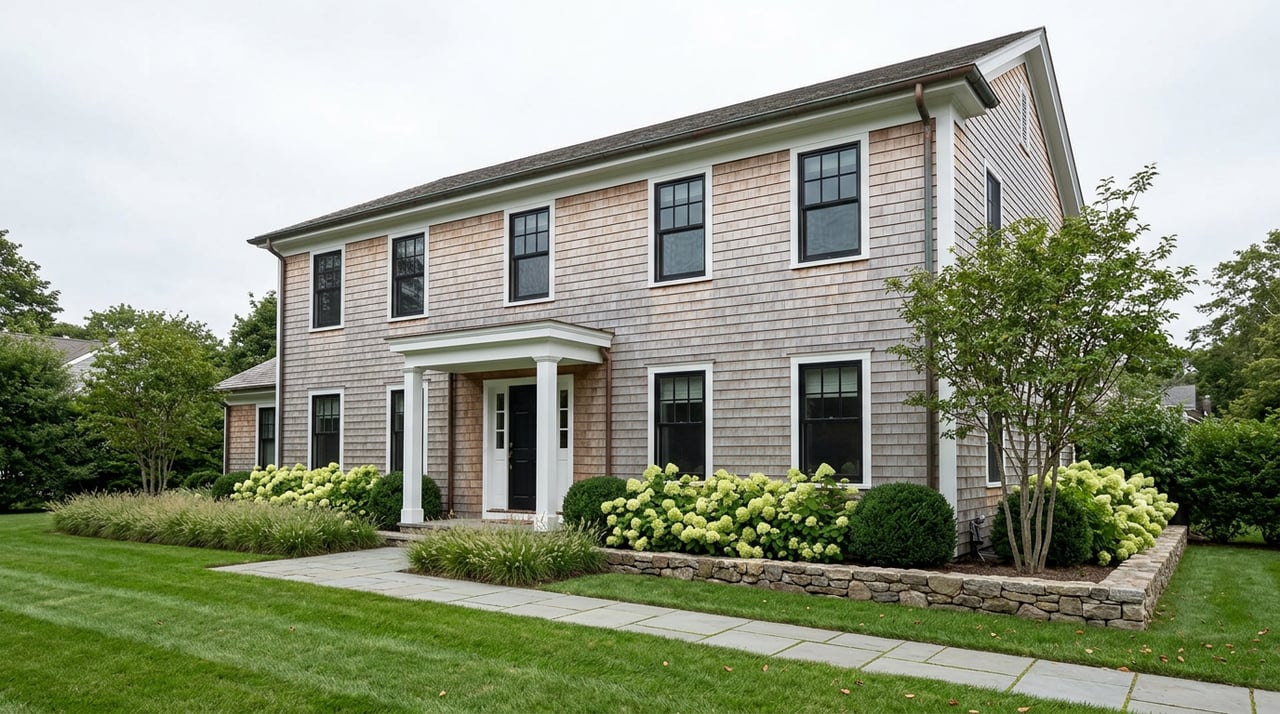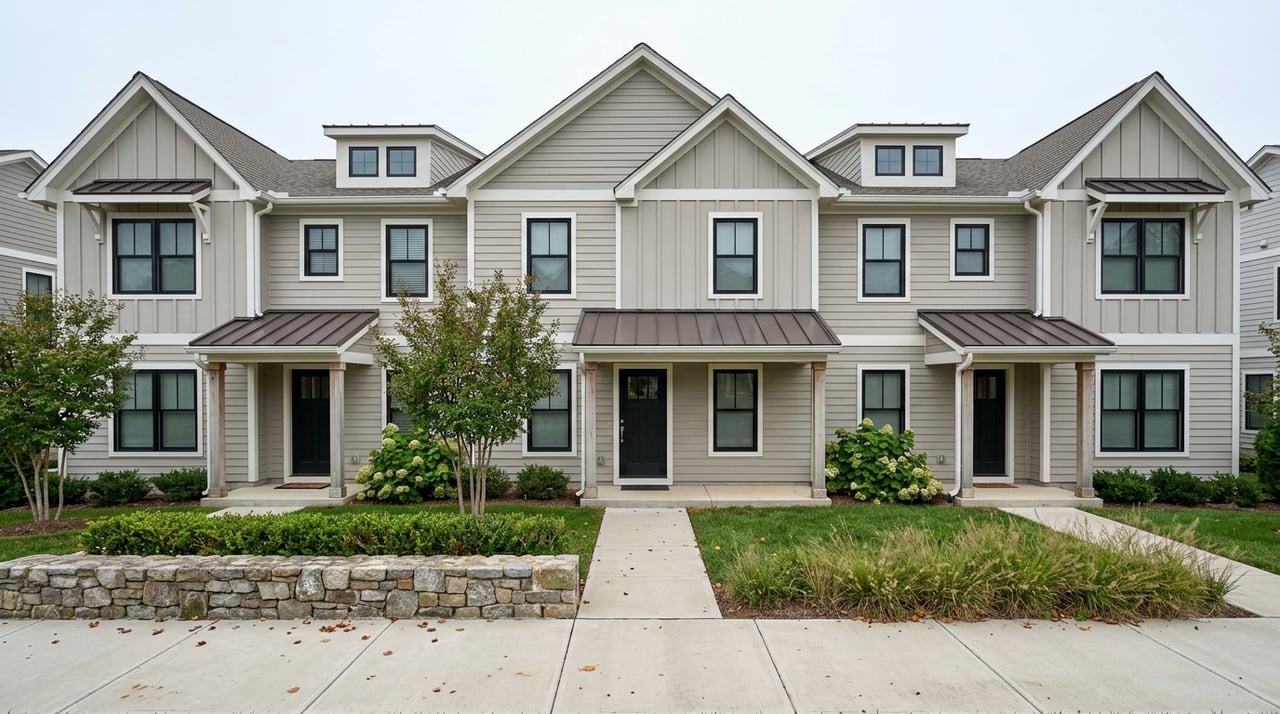
A buyer touring a townhouse near Trotter Road last spring asked her agent a simple question: is this Weymouth or Rockland? The listing said Weymouth. The agent had to check the parcel map before answering. The unit sat close enough to the old runway that the town line wasn't obvious from the street, the landscaping, or the price. It mattered anyway, because the answer determined which town would send her a tax bill every year she owned the place.
That's the thing about Union Point that doesn't show up in the marketing photos. The 1,400-acre redevelopment of the former South Weymouth Naval Air Station is sold as a single, cohesive community, complete with its own brand, its own trail map, and its own sense of identity separate from any one town. But Union Point isn't governed by one town. It sits across three: Weymouth, Rockland, and Abington. The Southfield Redevelopment Authority, the public body that oversees land use across the property, exists specifically because no single municipality has authority over the whole thing. It was created in 1998 as the Tri-Town Development Corporation and reconstituted by the state legislature in 2014 to keep municipal control intact across all three host communities.
For someone comparing homes here, that structure isn't trivia. It's the difference between three different property tax rates, three different paces of construction, and three different answers to the question of when the rest of the amenities actually show up.
Same Brand, Three Tax Bills
Here's the number that doesn't appear on any listing sheet: for fiscal year 2026, Weymouth's residential tax rate is $10.12 per $1,000 of assessed value. Abington's is $12.80. Rockland's is $13.87. A home assessed identically on either side of that runway will carry a materially different annual bill depending purely on which town's line it falls inside.
| Town | FY2026 Residential Rate (per $1,000) |
|---|---|
| Weymouth | $10.12 |
| Abington | $12.80 |
| Rockland | $13.87 |
Rockland's rate is roughly 37 percent higher than Weymouth's, and it isn't static. The Rockland Select Board approved that $13.87 rate in December 2025, which pushed the average single-family tax bill in town up 7.5 percent to $7,603 for the year. Weymouth moved the opposite direction. Its Town Council approved a 146 percent tax classification shift onto commercial and industrial properties for fiscal 2026, a move explicitly aimed at keeping residential rates the lowest in the region. Abington's Select Board, meanwhile, voted to hold a single tax rate rather than split it between residential and commercial, a decision its own deputy assessor argued would have saved homeowners less than 6 percent while raising business taxes by half.
None of these three towns coordinated on that outcome. Each set its rate independently, in a separate meeting, based on its own budget and its own tax base. Union Point buyers inherit whichever decision applies to their specific parcel, with no say in which side of the line they land on unless they know to ask before they write an offer.
Why the Rockland and Abington Sides Are Waiting Longer
The tax gap isn't the only place town lines show up. It also shapes how fast the rest of Union Point gets built.
South Shore News reported on a water capacity problem that is quietly steering where development happens first. The Abington-Rockland Joint Water Works is approaching state-imposed limits on how much water it can safely supply, and without an interim solution, officials face what the report called a sobering reality: nearly all Phase 1 development is being forced into the Weymouth side of the property, delaying tax revenue and infrastructure investment for Rockland and Abington by years. The 2015 legislation that created the current framework also specifically bars the redevelopment from drawing water from Great Sandy Bottom Pond in Pembroke, one of the Joint Water Works' three sources, which narrows the options further. Officials are now looking at whether older sources, including the Myers Avenue well and Fox's Pit, can be brought back online to bridge the gap until the property connects to the MWRA system, a process expected to take several years on its own.
Abington's portion has an additional wrinkle. When the town last approved zoning for its share of the old air base, it specifically prohibited residential construction there, a restriction the developer at the time agreed to. A newer master plan, reported by Abington News in 2023, proposes changing that, with roughly 75 of Abington's acres opening to development if the town loosens its existing zoning. Whether that plan advances depends on town votes that haven't happened yet.
Rockland's stake is smaller in acreage but geographically central. An extension of William Delahunt Parkway, built with $6.5 million in state funding, runs from Weymouth Street in Rockland to Route 18 in Weymouth, cutting through what is planned as Union Point's downtown core. It's a useful landmark if you're trying to picture where the actual town line sits on the ground, since the parkway crosses it.
Put together, the sections that broke ground first, including Woodstone Crossing from Pulte Homes and the townhouse and single-family mix at Four Winds from Bonvie Homes, sit on the Weymouth side, where water capacity and zoning allowed construction to move forward earliest. The Rockland and Abington sides are the ones still waiting on the plumbing, literally, before their share of Union Point can catch up.
What This Means If You're Comparing Union Point to the Rest of Rockland
If you're weighing a Union Point address against a more established home elsewhere in Rockland, the calculation isn't just square footage against square footage. It's two different versions of Rockland ownership.
A home in established Rockland neighborhoods, away from Union Point, is taxed at the same $13.87 rate and gets the town services that have existed for decades: full retail corridors, an operating rail trail, and a housing stock with resale history behind it. A home inside Union Point's Rockland-side footprint is taxed at that same rate, but the commercial buildout, the additional trail mileage, and much of the amenity base the marketing describes are still tied to Weymouth-side construction timelines that depend on a water solution not yet finalized.
Neither is a wrong choice. They're different trades. One buys into a finished town. The other buys into a rate that matches the finished town while still waiting on the neighborhood that's supposed to justify it.
Before you write an offer on anything inside Union Point's footprint, a few questions are worth asking directly:
- Which town's parcel map does this specific address fall under, not which town the marketing associates with the development overall.
- What is that town's current fiscal year tax rate, and has it moved significantly in the past two years.
- Which phase of construction is this section part of, and has that phase secured its water allocation.
- Are the amenities referenced in the listing, such as trail connections or retail space, already built, or are they part of a future phase tied to infrastructure that hasn't been finalized.
A seller or their agent should be able to answer all four without hesitation. If they can't, that's worth treating as its own piece of information.
FAQ
How do I find out which town a specific Union Point address is taxed by? Each town's assessor's office maintains parcel maps that show municipal boundaries, and the property's tax bill will list the taxing municipality directly. For any address you're seriously considering, confirm this before you get attached to a price, since the number on a listing sheet reflects only the home's list price, not which town sends the tax bill.
Will the Rockland and Abington portions of Union Point eventually have the same amenities as the Weymouth side? That depends on the water capacity issue getting resolved and on Abington's zoning votes moving forward, neither of which has a confirmed date. The infrastructure plan exists, but plans and completed water hookups are different things.
Does buying in a different town change which schools my property is assigned to? Yes. School assignment follows municipal boundaries, so a home taxed by Rockland is zoned to Rockland schools regardless of how close it sits to Weymouth-side development, and the same logic applies in reverse.
If you're comparing a Union Point listing to other options across Rockland, Weymouth, or Abington, it helps to have someone pull the actual parcel data before you get emotionally invested in a floor plan. That's the kind of groundwork Nicole and Tim do before a client ever writes an offer. If you want a clear read on what a specific address actually costs, and when, Condon Realty Group is happy to walk through it with you. Schedule your consultation.